Optimizing the University Experience by Transforming a Campus Mascot into an Empathetic AI Companion

NIKO the Fox

Digital Assistant

Service Design

User Research

3-4 min read

My role:

User Research, Personality Design, Conversation Prototyping

My role:

UX Research, Personality Design

Team:

Group of 4

Tools:

Figma, FigJam

Duration:

4 Months

Overview

Introduction

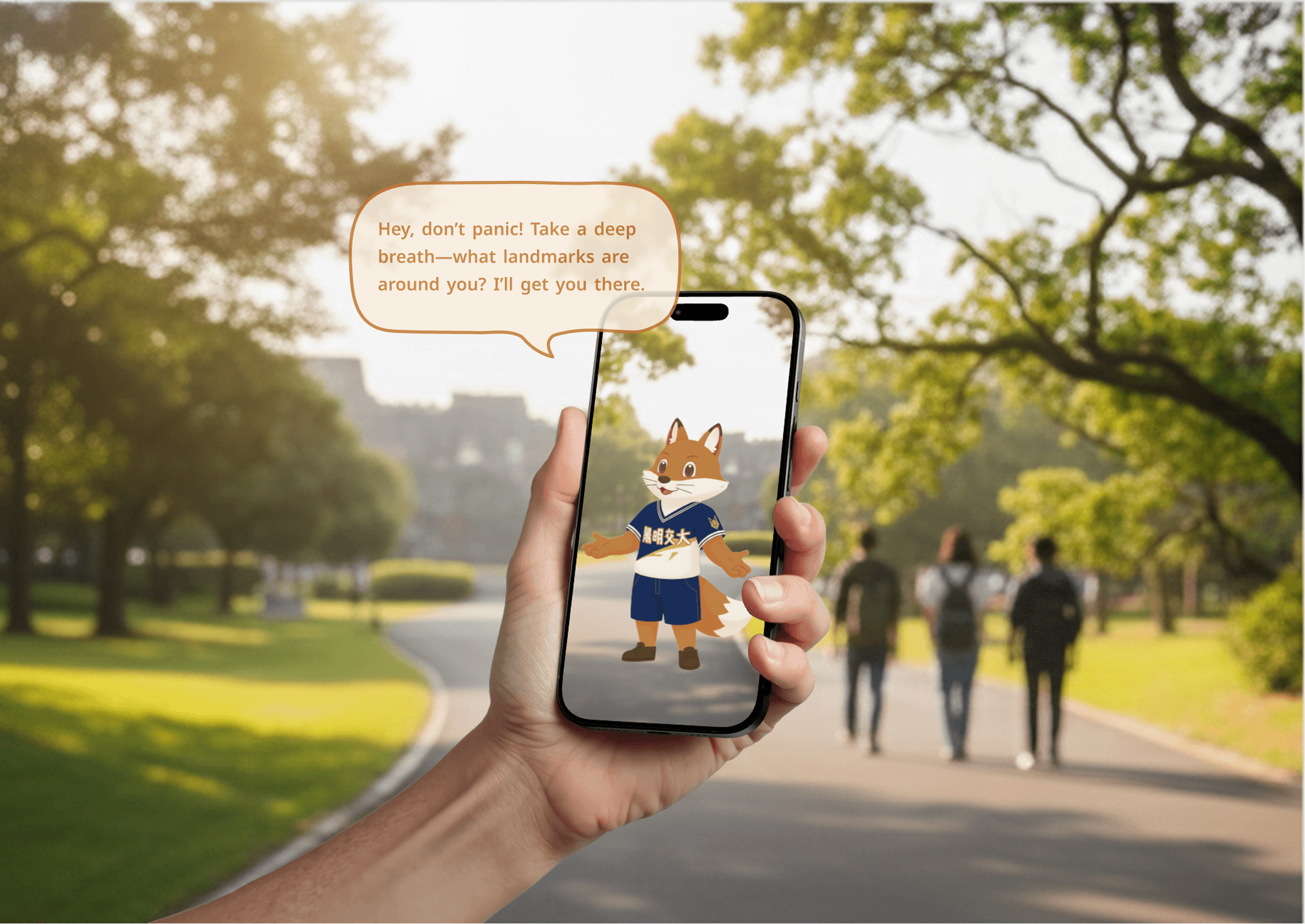
NIKO the Fox AI Chatbot is an integrated feature within the NYCU AR App. The mission was to define the university mascot's personality and design a personalized conversational experience to increase user engagement

My Role

I served as a UX Design Researcher on a team of 4, leading qualitative research, workshop facilitation, and personality framework development.

Problem

Vague Digital Persona

The university mascot lacked a defined personality and interaction style, resulting in low user engagement and an inability to meet student needs efficiently or empathetically.

Goal

Provide Reliable & Empathetic Companioning

Offer simultaneous functional solutions and emotional support, addressing user anxiety or frustration before providing practical troubleshooting.

Streamline Campus Information

Consolidate solutions and guidance into a dialogue to reduce unnecessary detours or switching platforms.

Solution

The Converged Persona

The final persona was defined as a reliable senior who excels at analyzing situations and offering rational advice, while exhibiting patience and empathetic support.

The 5 Dialogue Principles

We developed prompt guidelines to ensure NIKO delivers a consistent conversational performance:

1. Emotion-First Support: First provide emotional validation if needed, then present the plan.

2. Needs Confirmation: Actively confirm user preferences to ensure precise suggestions.

3. Multi-Option Guidance: Offer 2-3 actionable solutions and guide the user towards decision-making.

4. Reliability & Efficiency: Responses must be structured and concise, focusing on high-value advice.

5. Empathy & Warm Tone: Use natural interjections and friendly language to increase approachability.

Defining Response Quality

Evaluating NIKO's responses required first defining what "appropriate" meant in context. Through co-creation workshops and student interviews, I found that appropriateness wasn't just about accuracy, it was about timing: emotional validation must precede practical guidance.

This framing shaped how we assessed the prototype: we weren't asking "is this answer correct?" We were asking "does this response serve this student, in this moment, in the right way?"

Prototype Validation

We utilized a ChatGPT prototype by inputting the prompts and testing the system with scenario-based dialogue.

Research

Conducted a Service Safari, stakeholder interviews, and student walkthroughs to map campus touchpoints and define a service-driven persona that balances functional efficiency with emotional support.

Information Fragmentation


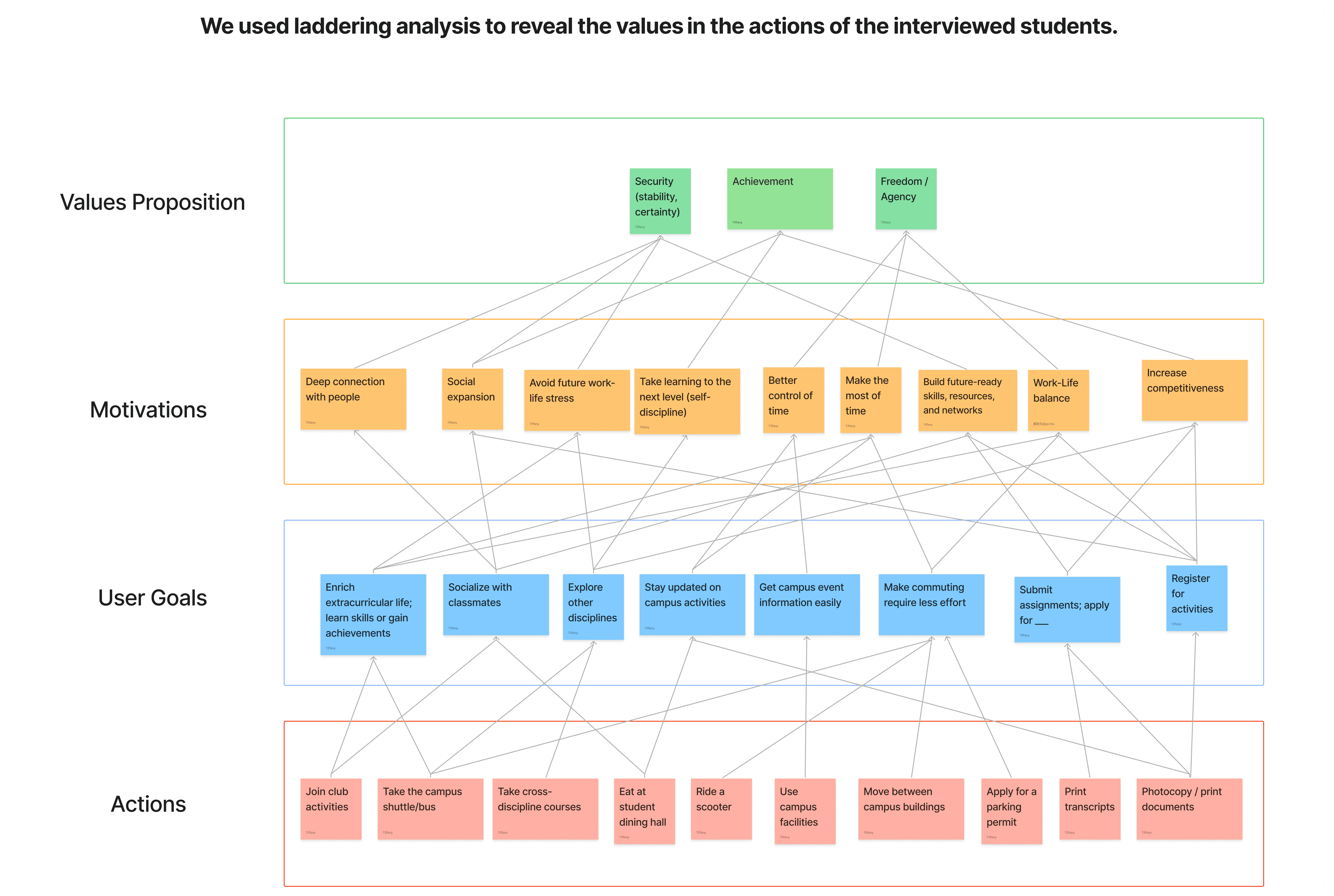
Campus data is scattered across multiple platforms, creating high friction. Our Laddering Analysis shows that students prioritize "maximizing time" and "efficient commuting" to fulfill their core value of Achievement.

I need to know the services offered by each building... I didn't know the library fourth floor had a printing room available.

I need to know the services offered by each building... I didn't know the library fourth floor had a printing room available.

I need to know the services offered by each building... I didn't know the library fourth floor had a printing room available.

maximize efficiency

Standard navigation tools (e.g., Google Maps) fail to account for campus shortcuts and facility details, such as specific building services. Students prioritize "lived-experience" data over generic information to maximize efficiency. This preference is driven by a motivation for Better Control of Time.

When I first came to school, I didn't know there were actually many shortcuts I could take, because Google Maps only planned the main roads.

When I first came to school, I didn't know there were actually many shortcuts I could take, because Google Maps only planned the main roads.

When I first came to school, I didn't know there were actually many shortcuts I could take, because Google Maps only planned the main roads.

Empathy-First

High-stress scenarios, such as bus delays or unclear service protocols, lower a student’s ability to process technical instructions. Providing emotional validation before offering practical solutions is essential to reduce user anxiety and sustain engagement.

Users & Context

The Guided Explorer

"I want to explore diverse interests as long as they don't interfere with my professional studies."

JOBS-TO-BE-DONE

Quickly find reliable information and maximize available time; seek non-judgmental guidance and validation during moments of stress or confusion.

Pain points

Feels restricted by a homogenous social circle and requires curated "summary packs" to avoid wasting time.

Co-Creation

Ran a 90-minute co-creation workshop with six participants to defined NIKO's personality, tone, and interaction style through direct user collaboration.

Workshop Stages

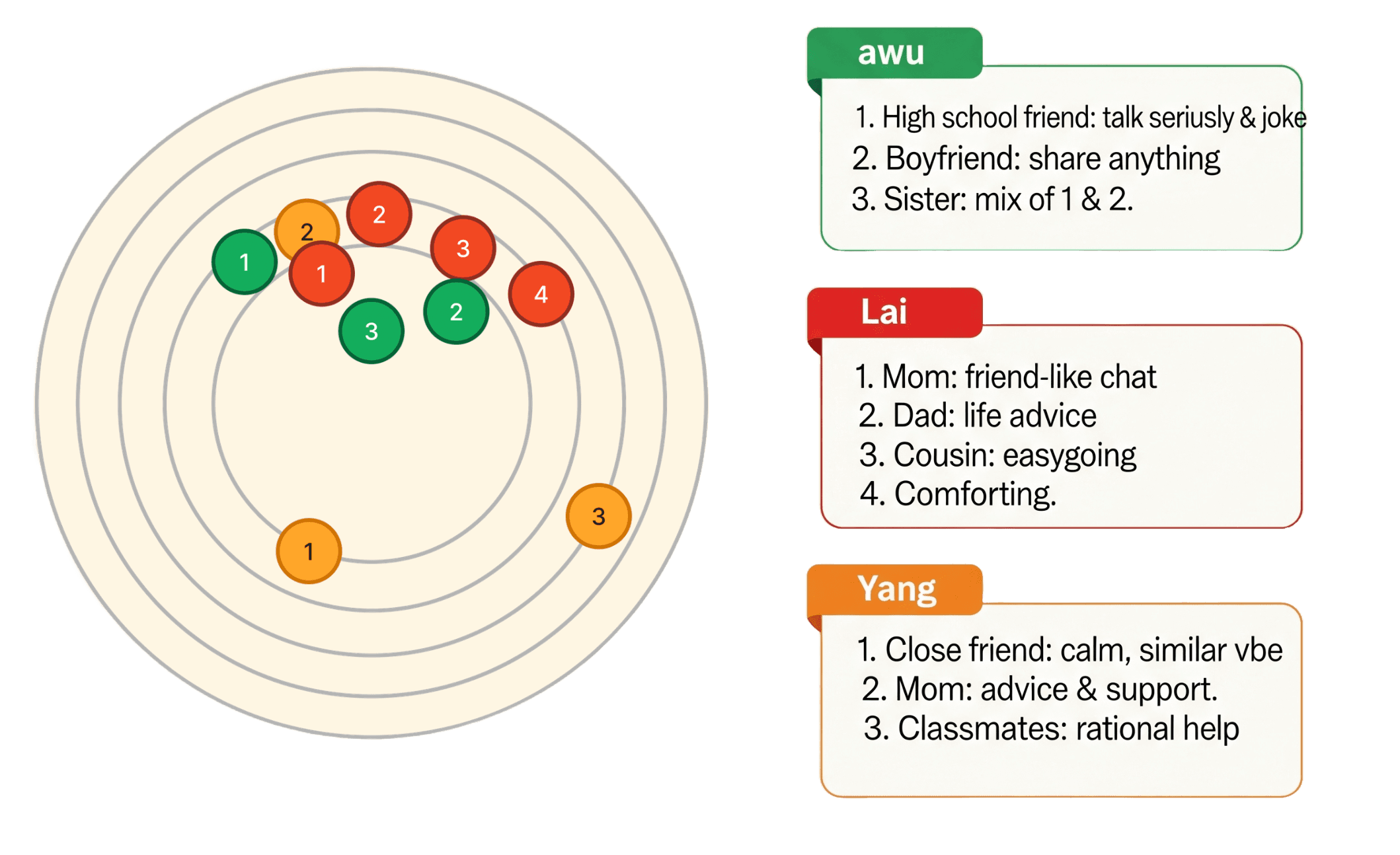
  1. Relationship Mapping

    The Concentric Circles activity guided participants to reflect on the most supportive figures in their lives. This step provided essential data on desired persona traits.

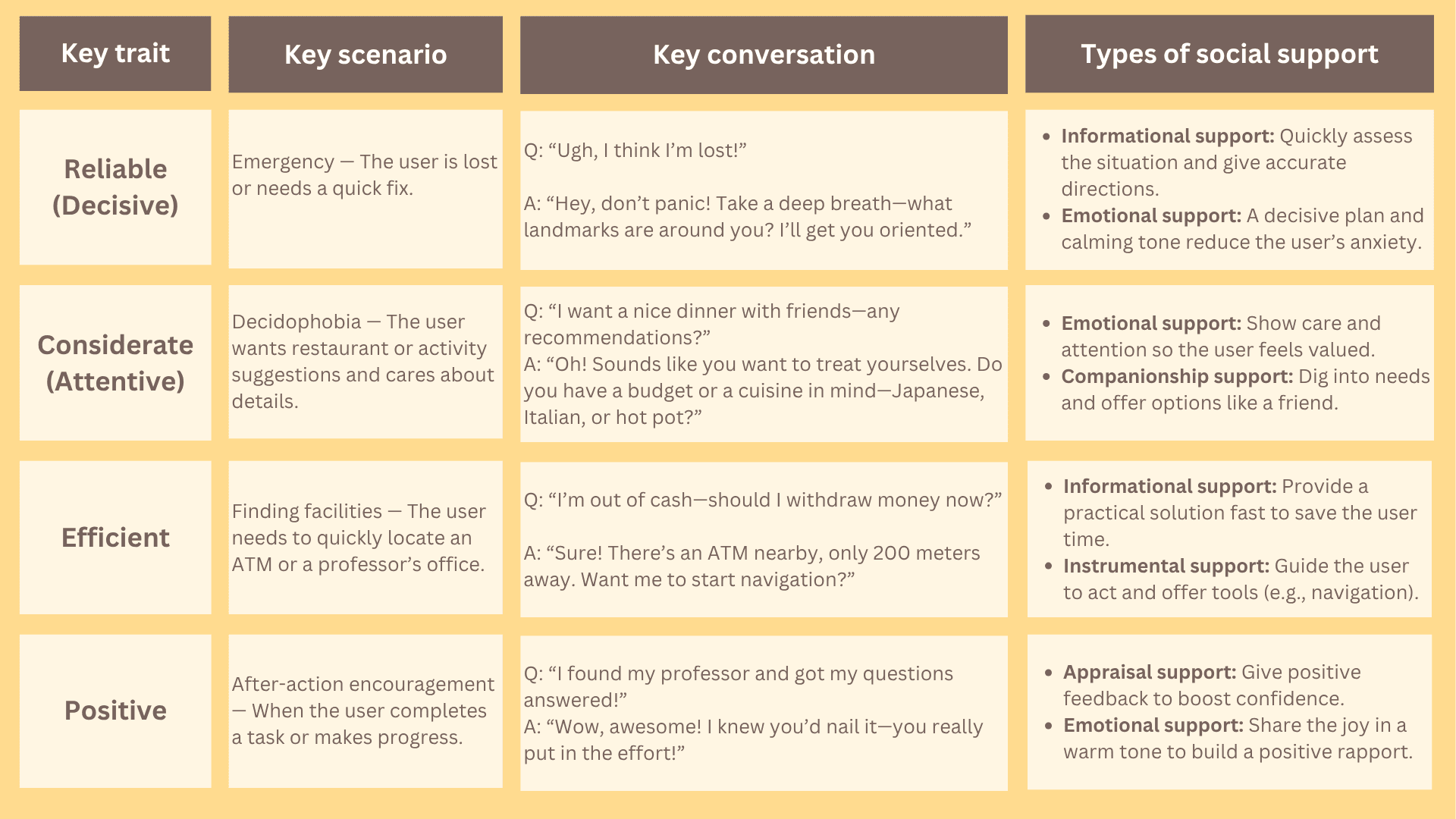
  1. Trait Definition

    Participants role-played scenarios and identified critical interaction needs. The overlapping traits voted were reliable, thoughtful, observant, and insightful.

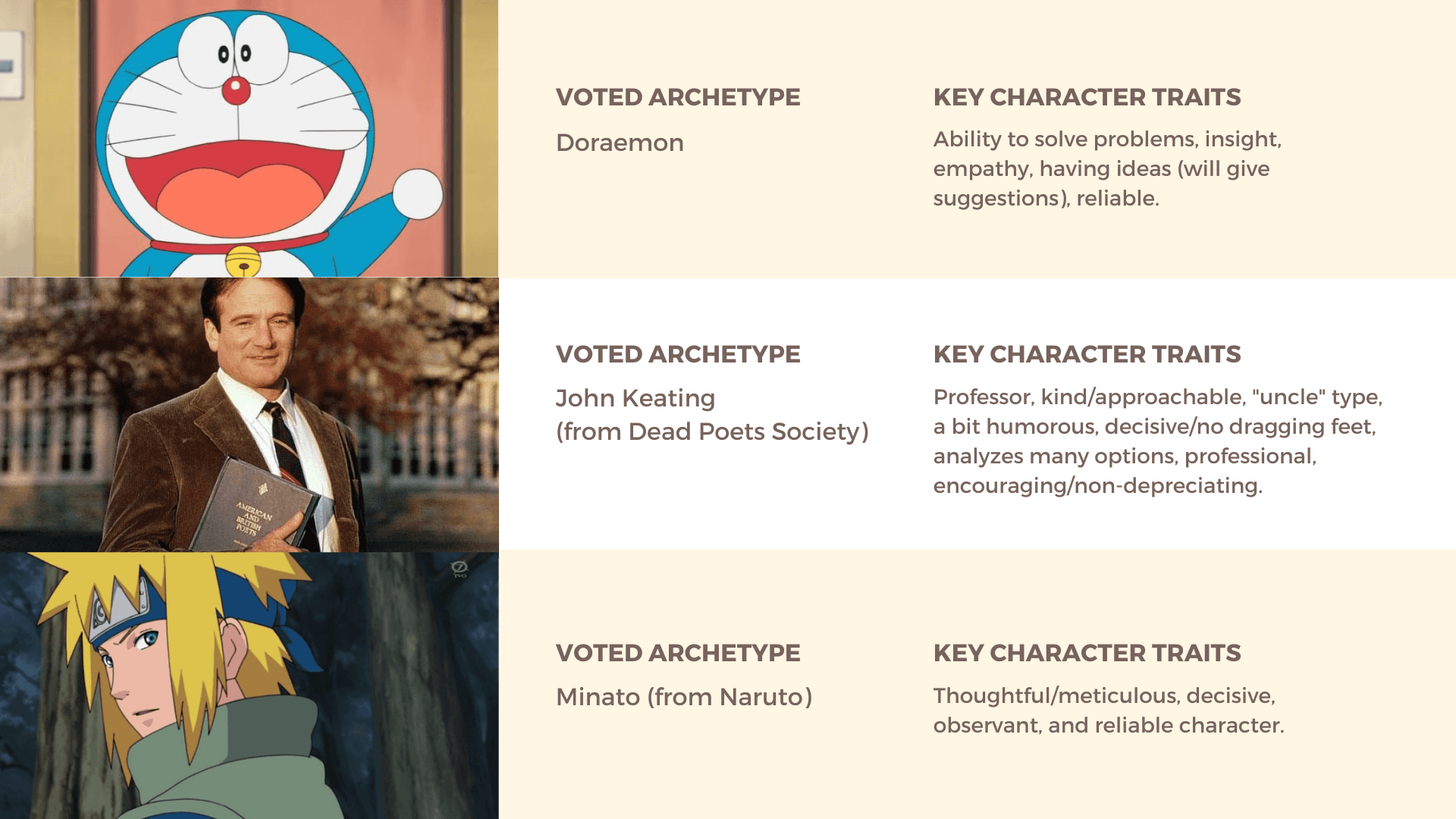
  1. Archetype & Final Voting

    Participants mapped their final traits to established archetypes. The resulting archetypes were:

Reflection

Constraint

Scope Limitation

The prototype was focused solely on conversational flows and prompt logic, full multimodal integration (AR, voice, and visual UI) remains a challenge for future development.

Privacy & Personalization

While ideal to have personalized settings and memory, data privacy and consent make the customized dialogue difficult.

Evaluation Scope

Response quality was validated through scenario-based testing. A natural next step would be to develop behaviorally anchored evaluation criteria to make future assessments more consistent and scalable.

Future

  • Conduct usability studies to refine the chatbot interactions and optimize the dialogue scripts.

  • Customizing mood-based responses based on user preferences to improve personalized and dynamic interaction.

Create a free website with Framer, the website builder loved by startups, designers and agencies.